Underfloor Heating & Flooring Compatibility: The Complete UK Guide
Not all flooring works with underfloor heating. Learn which materials conduct heat efficiently and which can damage your UFH system or void warranties.
Quick Takeaways
- Engineered wood is the recommended wood flooring option for UFH
- Maximum surface temperature: typically 27°C for most flooring types
- UFH must be commissioned before flooring installation
- Thermal conductivity matters - thin, dense materials work best
- Carpet is possible but reduces heating efficiency by up to 25%
The Growing Popularity of Underfloor Heating
Underfloor heating has become standard in London's new builds and increasingly popular in renovations. It frees wall space from radiators, provides even heat distribution, and works efficiently with heat pumps. But not all flooring plays nicely with heated subfloors.
As flooring specialists who regularly work on UFH projects across London, we've seen both successful installations and costly failures. This guide explains what works, what doesn't, and why.
Understanding Heat Transfer
Underfloor heating works by warming the floor surface, which then radiates heat into the room. The flooring layer sits between the heat source and your living space - it must:
- Conduct heat efficiently (thin and dense is better)
- Tolerate temperature fluctuations without damage
- Not insulate so heavily that heat can't reach the room
These requirements favour some materials over others.
Flooring Options Ranked for UFH
Excellent: Stone and Porcelain Tiles
The gold standard for UFH. Stone and porcelain conduct heat beautifully, retain warmth, and tolerate temperature changes without issue. They're ideal for kitchens, bathrooms, and any space where you want maximum heating efficiency. The main consideration is comfort - stone is hard underfoot, and you'll need rugs in seating areas.
Excellent: Engineered Wood
The best wood option for UFH. Engineered construction resists the expansion and contraction that damages solid wood when temperatures fluctuate. Most engineered floors are warranted for UFH use with surface temperatures up to 27°C. Choose thinner products (15mm or less) for better heat transfer, and always use a compatible underlay.
Very Good: LVT (Luxury Vinyl Tile)
LVT works excellently with UFH. It's thin, conducts heat reasonably well, and tolerates temperature changes. Most quality LVT is rated for UFH with 27°C maximum surface temperature. Rigid-core SPC products handle heat particularly well due to their mineral-based construction.
Acceptable: Laminate
Quality laminate can work with UFH but isn't ideal. The HDF core insulates more than LVT or engineered wood. Choose products specifically rated for UFH, respect temperature limits strictly, and expect slightly reduced heating efficiency.
Possible but Limiting: Carpet
Carpet can be used over UFH if combined TOG rating (carpet + underlay) stays under 2.5. Higher TOG ratings act as insulation, blocking heat from reaching the room. You'll need to run the heating at higher temperatures for less effect - wasteful and potentially damaging. If you want carpet on UFH, choose low-profile options specifically designed for heated floors.
Not Recommended: Solid Wood
Solid wood and UFH rarely work well together. Temperature fluctuations cause solid planks to expand when warm and contract when cool. This leads to gaps, cupping, warping, and joint failure. Most solid wood warranties specifically exclude UFH use. If you're set on solid wood appearance, choose engineered construction instead.
Installation Best Practices
Commission UFH Before Flooring
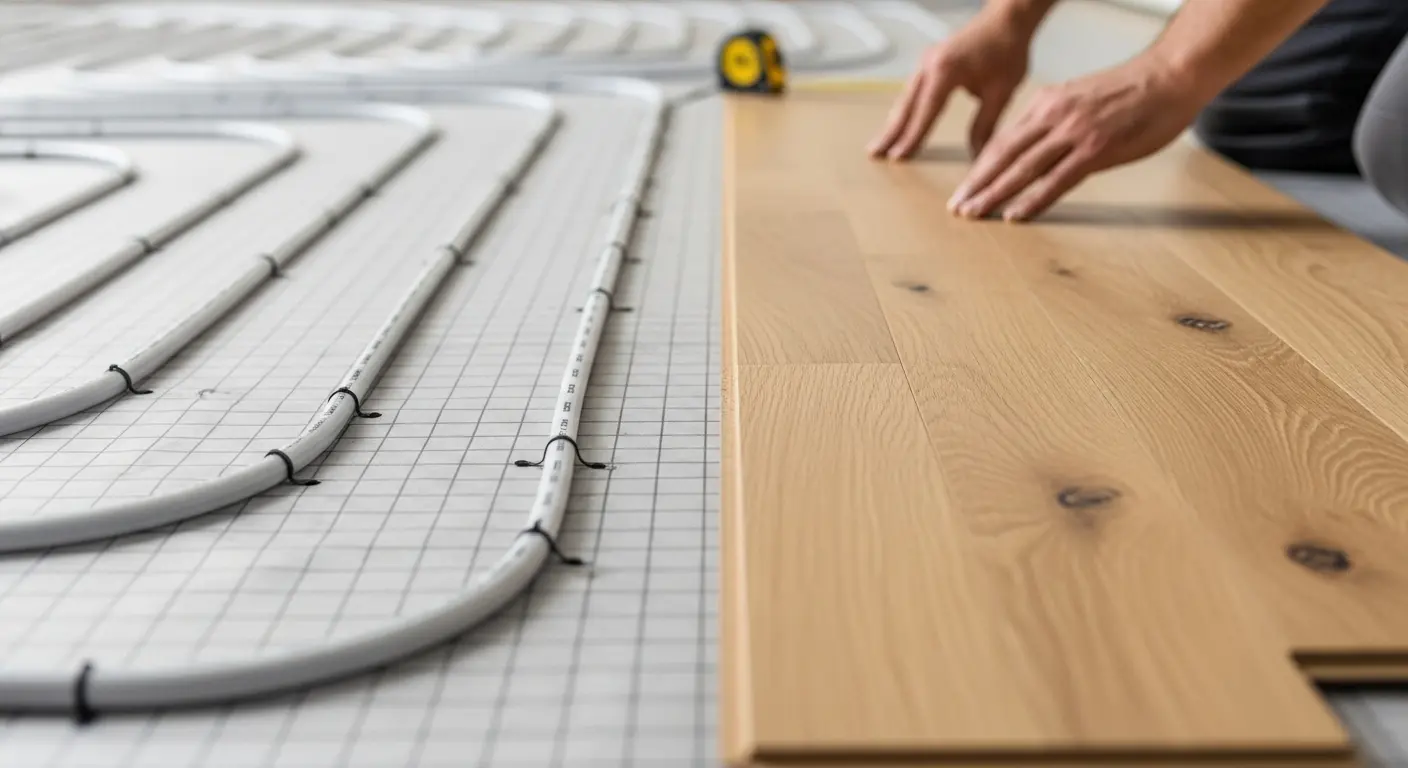
The heating system must be commissioned - run through full heating cycles - before flooring installation. This drives out construction moisture from the screed and verifies the system works correctly. Installing flooring over un-commissioned UFH risks moisture damage and thermal shock. Most manufacturers require documented commissioning for warranty validity.
Acclimatise Flooring Materials
Wood and laminate products should acclimatise in the room with UFH running at normal operating temperature for at least 48 hours before installation. This allows materials to stabilise at their installed conditions.
Use Appropriate Underlays
Standard underlays often insulate too much. Use thin, UFH-compatible underlays (typically 1-2mm) that provide cushioning without blocking heat transfer. Some products have integrated underlays specifically designed for heated floors.
Respect Temperature Limits
Set heating controls to respect surface temperature limits - typically 27°C maximum for most flooring. Higher temperatures risk flooring damage and warranty voidance. Consider installing surface temperature limiters for safety.
Conclusion
Underfloor heating and beautiful flooring can absolutely coexist when products are correctly specified and installed. Work with flooring and heating specialists who understand the interaction between systems. Proper planning and installation deliver years of comfortable, efficient warmth underfoot.