Basement Flooring for London Conversions: Moisture, Insulation & Style
Navigate the unique challenges of basement flooring. Moisture management, insulation, and appropriate product selection for below-ground spaces.
Quick Takeaways
- Moisture management is absolutely critical in basement environments
- Waterproof flooring (LVT, tile) recommended over wood-based products
- Proper tanking and DPM must be completed before flooring installation
- Insulation underlays add comfort and reduce heat loss
- Extended drying times required for new basement construction
Understanding Basement Flooring Challenges
London basement conversions add valuable living space - often doubling usable square footage in terraced houses. However, below-ground spaces present unique flooring challenges. Higher humidity, potential water ingress, cooler temperatures, and limited natural light all affect product selection and installation approach.
We've installed flooring in hundreds of London basement conversions, from utility rooms to full living accommodation. This experience has taught us what works - and what fails - in these demanding environments.
Moisture: The Primary Challenge
Sources of Basement Moisture
Basements face moisture from multiple directions:
- Ground moisture: Water in surrounding soil attempting to penetrate walls and floors
- Rising damp: Moisture wicking up through concrete or masonry
- Condensation: Warm air meeting cold surfaces (particularly in poorly ventilated spaces)
- Leaks: Plumbing failures, drainage issues, or waterproofing breaches
- Residual construction moisture: New concrete retains moisture for months
Why This Matters for Flooring
Moisture destroys most flooring types:
- Wood swells, cups, and warps; may develop mould
- Laminate's HDF core swells and disintegrates
- Adhesives fail, causing lifting and bubbling
- Mould grows beneath non-breathable coverings
- Finishes delaminate and fail
Moisture Management Requirements
Structural Waterproofing
Before considering flooring, basement waterproofing must be complete and proven. Options include:
- Tanking: Waterproof coatings applied to walls and floors to resist water pressure
- Cavity drain systems: Membranes that manage water ingress, directing it to drainage
- External waterproofing: Barriers applied outside the structure
Flooring decisions come after waterproofing is verified working.
DPM (Damp Proof Membrane)
Even with structural waterproofing, DPM beneath flooring provides additional protection. Options include:
- Liquid-applied DPM directly to concrete
- Sheet membranes beneath floating floors
- Self-adhesive underlays with integral moisture barriers
Moisture Testing
Before any flooring installation, moisture levels must be tested and documented:
- Hygrometer testing for relative humidity in concrete
- British Standard requirements (typically 75% RH maximum, some products require less)
- Documentation for warranty compliance
Recommended Basement Flooring
LVT (Luxury Vinyl Tile): Our Top Recommendation
LVT offers the best combination of basement-appropriate properties:
- Completely waterproof - unaffected by humidity or minor moisture
- Comfortable and warm underfoot compared to tile
- Excellent wood and stone effects available
- Compatible with underfloor heating
- Easy to repair if sections are damaged
For basements, we recommend rigid-core SPC products with moisture-resistant underlays.
Porcelain Tile: Maximum Durability
Tile is inherently impervious to moisture and extremely durable. Ideal for utility spaces, bathrooms, and where maximum resilience is needed. Cold underfoot unless combined with UFH. Consider large format tiles to minimise grout lines.
Engineered Wood: With Caution
Engineered wood can work in basements with excellent moisture management:
- Proven waterproofing with documented performance
- Quality DPM and moisture-barrier underlay
- Controlled humidity (dehumidifier if necessary)
- Monitoring during first year
We advise caution and full disclosure of basement conditions before recommending wood.
Flooring to Avoid in Basements
- Solid wood: Too susceptible to humidity fluctuation
- Laminate: HDF core cannot survive basement moisture
- Cork: Absorbs moisture, prone to mould
- Natural carpet: Harbours mould in humid environments
Temperature and Comfort
Basements are naturally cooler than above-ground spaces. Without adequate insulation and heating, even the best flooring will feel cold and unwelcoming. Consider:
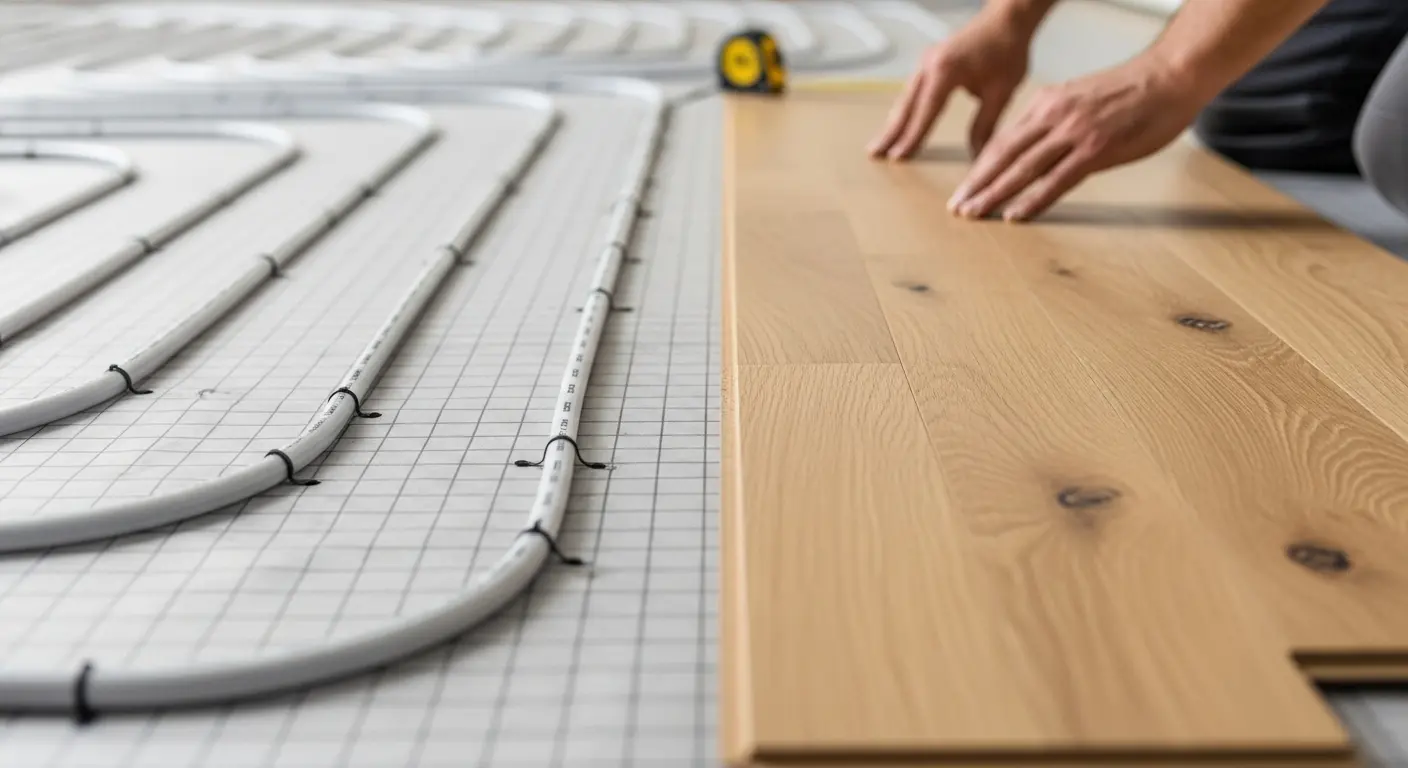
- Underfloor heating: Electric UFH systems are popular in basement conversions. They help control humidity while providing comfort. Ensure flooring is UFH-compatible.
- Insulated underlays: Add thermal and acoustic insulation beneath hard flooring. Improves comfort significantly.
- Rugs in living areas: Add warmth and comfort to basement living spaces without replacing flooring.
Lighting Considerations
Basements typically lack natural light, affecting how flooring colours appear. Consider:
- Light-coloured flooring reflects artificial light, making spaces brighter
- Avoid very dark floors that absorb limited light
- View samples under artificial lighting similar to your basement's
- Consider how flooring interacts with lightwell or window placement
Timeline and Planning
Basement flooring installation requires patience and proper sequencing:
- Waterproofing first: Complete and test structural waterproofing before flooring decisions
- Extended drying: New concrete needs 3-6 months minimum; basements dry slower than above ground
- Moisture testing: Professional testing before installation - don't guess
- Acclimatisation: Materials should acclimatise in the basement environment before fitting
Rushing any stage risks flooring failure. Allow adequate time for each stage.
Conclusion
Successful basement flooring requires waterproof products, proper moisture management, and patience during construction drying. Combine appropriate materials with good underfloor insulation and heating for comfortable living spaces. Work with specialists experienced in basement environments - the right approach delivers beautiful, long-lasting floors in your newly converted space that add genuine value to your London home.